State Representative Carole Fiola
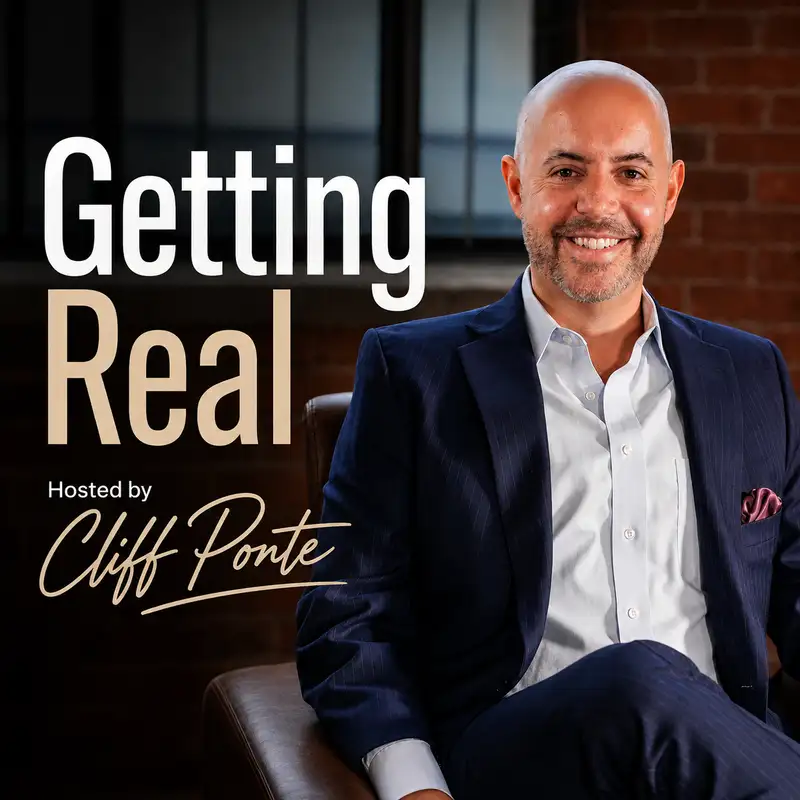
My name is Cliff Ponte. I am a Fall River politician, city council president. I am an entrepreneur, own a number of businesses in the city. And I wanted to start this podcast because I wanted to shine a light on Fall River, have discussions about where Fall River is at, the people that make it, the people who are part of it, the people who might be popular and, heck, maybe the people who aren't as popular. That is what I am trying to have this podcast encompass.
Cliff:Real stories, real accountability, some fun along the way, and hopefully for you to see a little different side of me as not this big, stuck up, cocky, arrogant individual. Maybe a person who is real, who does the same things you do, but also is perceived as being a little rough around the edges or cocky and arrogant when I don't intend to be. I'm just focused on what I
Carole:need to do.
Cliff:Search for Getting Real wherever you subscribe to your podcasts. I started the introduction of this podcast when we launched this this season as a way for the community to kinda see a different side of me, to interview some some people that have made tremendous impacts in the community. You know, being a city councilor, sometimes you're in a position where people might look at you as being negative when you hold people accountable. Sometimes people, look at you as, you know, looking out for your own best interest, and and that's certainly not why people are in public office or run for public office to have that kind of perception. I've really, really tried over the last three or four years to be that person who's approachable, somebody can talk to and have a conversation with.
Cliff:Sometimes when you're an elected official, people feel that you are arrogant, you're cocky, you're self centered. And the whole point of launching this season or this podcast is for people to see that perspective, to see that person, and to engage in people that have made and had tremendous impacts on our community. And I've had some very, very awesome guests, and we're continuing to book individuals who wanna join us. I am honored today, though, for this episode to be joined by a individual who has been involved in politics for many, many years ever since I can remember paying attention to politics. And I had a conversation with her recently, and I said to her when she called me, speaking on City Business, I'm honored that you are my rep.
Cliff:I am in the North End Of Fall River. Carole Fiola is joining us today on this episode, and I am and I meant that when I said that to you. You are my rep, and you I am honored that you are. There there wouldn't be another person that I would want to represent me in Boston because you have delivered. You've delivered since you were a freshman rep.
Cliff:You delivered when you were on the governor's council. You delivered when you were in private practice as a real estate broker as well. So Carole, welcome. Thank you for joining us.
Carole:Well, what a nice introduction. Thank you. It's an honor for me to be here. You're right. We've known each other as long as maybe you can remember because I'm a little bit older than you.
Carole:To be perfectly honest, Cliff went to school with my oldest daughter at Durfee. Yep.
Cliff:Right? And and she was yeah. I always say this. I think every time I talk to you or Ken, I say, how was your daughter doing?
Carole:You.
Cliff:Yeah. Because she she was she was a great athlete. Soccer, basketball. I mean, I remember I I was jealous because of how much of a great athlete she was and how how terrible I was. It's reality.
Carole:But We all have our strengths, but she's great. And the only thing about that she doesn't live around here right now.
Cliff:Can I make it right?
Carole:She lives in Wisconsin. Wisconsin. And her husband's a football coach at the University of Wisconsin. So they are in a traveling that's the kind of job it is. You could leave come January, the end of the season.
Carole:No, you're out. But the best thing about it is I have two grandsons. Alex has two boys. I have the two girls and she has the two boys and they are my greatest joy. They really are.
Carole:Five and three and it's just a blast when they are here or when I am there.
Cliff:That's awesome. So I meant when I said it, there's no need to to for me to fabricate anything. You have, over your career, delivered for Fall River and delivered for your constituents. What is it like so, like, I'm a city council president. I've been involved.
Cliff:I know what you do. I know that you're out at every event. You're at as many you know, when you're not in session, as many openings of anything that you can be. You're very, very out there in the community. You care about the community.
Cliff:You're engaged in your community. You're not a rep where you're a lawyer full time and you're a rep part time. You are full time at your job.
Carole:It's funny, Cliff, you say that because when I first ran for state rep and even actually as governor's council, when I was Governor's Council I had a career. I was in WSAR at the time, General Manager Vice President, then I knew I needed a little more time. Even though people do have full time jobs with the Governor's Council, I just felt, here's my philosophy. If you chose me to be your representative, whether on the Governor's Council or the actual state representative, you could have picked anyone. I represent about 44,000 people today in this district.
Carole:So they're kind of small districts, unlike the governor's council, which was huge. But if you chose me, I owe you to give you my all and to make sure that every day, certainly not going to make everyone happy because things we vote on or money we get or don't get or an event we showed up to or couldn't show up to, but I give it my all. I am very blessed that I am able to do that. Like you on the city council, you do a great job, you're a great leader, It is about work ethic. And I think you are either you have it or you don't.
Carole:And, we're very blessed. We have supportive families. I know you do. You know, from what I know of your mom, your dad, your grandmother, your your your brother, that's really important. And so for me, if you don't have supportive family, these are very, very difficult jobs because we are out all the time.
Carole:We are taking calls all the time. And so it just goes to if I am not out there making myself visible so that people can have an opportunity to say, Hey, you got a second? This happens all the time, whether I'm at a park event, I'm at someone's fundraiser, or whether I'm at an opening of a new behavioral health center, whatever it might be, someone will inevitably say, Hey, you got a second? And they tell me what's important to them. And I carry that with me.
Carole:Today, have a 04:30, a meeting with someone, four or 04:30 to four Very, very important issues to them on mental health. Very, very important.
Cliff:It's just a normal everyday person.
Carole:It's Well, not somebody who's engaged in But this we're going to meet at a coffee shop because she wants to share with me some kind of current information that she thinks I should have that I can hopefully act on. It's every day, but that's the job I was elected to do. And I'm not going to shortchange anyone. And again, going back to the family, my children are grown, that's very helpful. So I don't feel like I'm torn on the family side.
Carole:But my husband obviously is active in this community and has been in this community all his life. He completely supports me. So we've been married forty years. He knows we grow like this. We grow separately and we grow together as a family.
Carole:And he does his thing. I do mine. And I'll tell you just to digress a second. People will say, Oh, did Ken tell you? I told him that.
Carole:I go, No. I go, Should he have? I mean, we come home and it's
Cliff:You don't wanna talk about
Carole:We that anymore. Don't. I mean, there are some things we'll chat about, but let me be honest. People can't believe that. They think we're constantly talking about these day to day things in Fall River.
Carole:And we do share that passion, But we get home and it's like, okay. Alex wants us to go out to a game in in this weekend, and have we talked about those plans? Or did you see, you know, JJ went to his kindergarten orientation or,
Cliff:you
Carole:know, mom's, you know, buying a house, my other daughter, you know, we talk about our life like most families do. But, yeah, we love this community. I love this community like you do, and I make myself as visible as possible.
Cliff:Yeah. Yeah. No. I don't think anybody could ever outwork you candidly. And I've been critical of the mayor sometimes when it comes to his policy or his style, and we have you know, we can disagree with each other from politics.
Cliff:I don't think it's ever been personal, at least from my perspective, hasn't. And he's a hard worker and very much like you. Like, you are everywhere. And and and not only are you attentive, but you also deliver for your community as well. That's important.
Cliff:So I run like I wanna get into kinda two things because most people, me included, I don't I know what you do. I know what a rep does.
Carole:Mhmm.
Cliff:But what is, like, what is it like? What because we don't watch your meetings on TV. We don't know if you're arguing with the speaker, or we don't know if you're arguing with your colleagues. City council meetings, they're there. They're on social media.
Cliff:They're talking about you. Nobody really knows the everyday person what happens in Boston.
Carole:That's really good point. And we were talking about this off off the microphone before we got in here, how things have changed so much. Journalism is disappearing. Yeah. Sadly.
Carole:Yep. Local journalism in particular. Social media and clicks and all of that has grown, has grown. People can be anonymously sharing false information all day. And people are angry for a lot of good reasons, right?
Carole:The economy is different, politics on the national level, pocketbooks, energy costs, housing issues. I get that. I guess people are frustrated. But I want to just say that you can follow us to a good degree on malegislature.gov. And if you go to that website, anyone listening, and you go on it, you can see click on bills.
Carole:You can click on legislators. You can click on the video of the formal sessions going on. You can see a past hearing.
Cliff:If you were advocating for something, I could watch you
Carole:watch it. I I'll give you a quick example. Like, last two weeks ago, we had the culmination in the House of Representatives of a big economic development bill. And I get how people don't understand it, but I don't understand what the head of the community maintenance department does. Right?
Carole:Right. I would have to sit with him and say, what do you do all day? Cliff, what do you do as owning Keller Williams real estate? None of us really understand what each other does. And so there is a little bit of trust, never mind, for an elected official.
Carole:But I serve as the chair of a committee, Economic Development and Emerging Technologies. And every session, which is two years, the governor's job typically is to file a comprehensive bill on economic development. This year, last session, I was not the chair of this committee, was the chair of something else. The governor filed a hugely comprehensive bill, 5,000,000,000, big bill, lots
Cliff:of On economic development.
Carole:On economic development, emerging technology. It was a housing bill, economic development bill, a lot of refunding, reauthorizations, a lot of policy. So this session, it was unclear what she was gonna do. We take the lead from the governor on that. But it wasn't until May that she filed the bill, which is extremely late.
Carole:Usually March, we get a bill. And we, myself, in the House, I received that bill.
Cliff:As chair or just As as chair. A
Carole:As the chair and my committee staff.
Cliff:And
Carole:our job is to go through that bill, not only with the committee staff, but my committee of bipartisan representatives, and we host a hearing on that bill,
Cliff:a public In your district or anything?
Carole:A public hearing online. You can watch the hearing tomorrow, today, five minutes. And then we go back to work. And then we, our committee staff looks at every section of that bill, digests the public input from the hearing and written testimony, which is also available. And we have meetings.
Carole:We have meetings with the advocates. We have meetings with the opposition. We have meetings with everybody to understand why you support lowering LLC costs. You know, the Secretary of State, if you're going to open a small business, you've got to go to every section. There were one and twenty eight secondtions to this bill.
Carole:So we spent months, two months straight. We only got it in May. We just two weeks ago put it out. We put it out three weeks ago to the entire membership for their review. We had a caucus meeting on it.
Carole:I addressed the caucus that is behind closed doors. That was our Democratic caucus. Went through it with them, and then we got to the floor of the House of Representatives. I spoke on the bill, but I'd already vetted and had questions and met with almost every representative to understand what was important to them in the bill or not. And we had amendments filed, six eighty eight amendments Wow.
Carole:To the That's where little projects come in, where you file projects in that bill that might be specific to your district versus the entire Commonwealth. And then I spoke to the bill, and then we voted on it and sent it over to the Senate. And as we speak, the Senate is reviewing the bill. They've just filed their amendments by 05:00 today. This is a Monday we're doing this.
Carole:And they'll have their bill. Every bill in this one hundred and ninety fourth session of the legislature that has been heard by both the House and the Senate and are different. There always could be different two words or huge pieces of policy difference. But that bill, they're looking at it now. I already know what's not in it that we put in or what's in it that we didn't put in.
Carole:And now we get to negotiation. We get to what's called a conference committee.
Cliff:Who's negotiating?
Carole:Now what happens is the speaker and the senate president choose a small group of people. Since we already vetted in the senate, vetted in the house, they entrust a small group of people called the conference committee, both bipartisan, minority and majority parties, to hash it out. Okay. This line says you want LLCs or or you want you want to provide federal funding, funding to replace the federal cutbacks to public institutions in the Commonwealth. Oh, House, you put it in only the the publics and a little bit for private.
Carole:Senate, you only put in for public. You put in 200, House. You put in a 100, Senate. How are we gonna negotiate that? What are we gonna have that look like when we bring it back to the membership?
Cliff:Are these reps that are on that
Carole:Yeah, so as the chair of the economic development, the House Economic Development Committee, it's likely I'll be on it. It's likely a ranking minority member will be on it. Probably the one that was on my committee. The chairman of ways and means in the house, chairman of ways and means in the senate. My senate co chair will be on it likely again it never is never done till it's done.
Carole:So then we have meetings and we go to each line with our staffs and we come up with a compromise a collaboration because that's how it is we understand that nothing can get done even though we disagree on a lot of things until we compromise and collaborate so that we can move forward. And so we will have a bill. But now another little twist to the whole equation is we're always trying to figure out, as you said earlier, what the public is thinking or how we can be better at what we do. So we normally, on the second year of our two year session, by July 31 of that second year, we wrap it up from a legislative point of view. The budget is done.
Carole:Whatever we've heard or haven't heard is over. Any bills that have come out of conference committee or are in conference committee, we've got to finalize them by July 31, come to collaboration and agreement, or else they die until next session in January. But this year is the first year where we have said any bills that are voted on by both the House and the Senate separately in their branches and end up voted on assigned to a conference committee we will work until the beginning of the next session. So we will be I'll just use the economic development bill that I'm likely to be the conferee on. We will be meeting after July 31.
Cliff:Interesting.
Carole:Normally that was done many years ago. Forget what year that was statute in place that said, Go back to your districts. It's an election year. Go and make sure you're in touch with your district. Make sure you do your campaign work so when you come back in January, you'll be ready again.
Cliff:So you so how do the sessions work? So, like, time wise every year.
Carole:So there is a you mentioned earlier, people don't get it. It's hard to understand unless you're in it, like I said, with any job. So we get elected in November in a perfect storm. I got elected in a special. So everybody got elected in You were
Cliff:one after Dave Sullivan left?
Carole:That's right. He left. But everybody got elected in November of the year, and they came in in January. It was an orientation. They got to meet people.
Carole:And they got sworn in in January, filed bills in June. I didn't, until the following September, get elected.
Cliff:I'm curious. Was that the year Linda, Brad Kilby?
Carole:Not Linda. Brad, Dave Sullivan, Jerry Poppin.
Cliff:No, no, you beat
Carole:Dave Sullivan? No, excuse me. Brad, Jerry Poppin. Yep. Dave Steinoff.
Cliff:Okay.
Carole:Didn't he run against Dave you Dennis.
Cliff:Dave Dennis. Didn't he run against Okay.
Carole:Yeah. So interestingly, so what happens is you get elected in the perfect world without a special election. You get elected in November and you spend that time kinda figure getting ready. There's usually an orientation of the legislature. The house the speaker hosts something at UMass Amherst, and we go up and seasoned reps.
Carole:Those who've been there longer present and, house counsel and the clerk and all the people that support the legislature in the building kinda give a little overview. It's It's helpful, but it doesn't sink in until you've done the job like anything else, So we get sworn in on the first Wednesday. Last year was New Year's Day. No matter what, that's by statue. We get sworn in at the legislature in the House chamber and we vote on our leadership for that two year session.
Cliff:And it goes two years.
Carole:Two year session.
Cliff:What is that? Can I ask? Yeah. What is that like?
Carole:Oh, it's like Think about it.
Cliff:Is it when I run for council president? It's like, do you have to and then you upset people because there's three people? Is that how it goes? Say that again? Like, so, like, if I'm if me and somebody else wants to be council president in Fall River, we're over here trying to get our colleagues to say, yes.
Carole:Same thing. There's a lot of vibe, though, ahead of time and a lot of confidence. Mean, I have not been there. I've been there since September 2013. It'll be thirteen years this September that I've served.
Carole:It feels like yesterday. It's unbelievable. But I've not been part of what they used to call a speaker fight a big fight.
Cliff:Okay.
Carole:I came in Bob DeLeo was our speaker great guy Ron Mariano our speaker today was the majority leader that's kind of normal spot that you could come from. There was collegiality. People liked our speaker.
Cliff:Do you become speaker? Is it like you have to be in the legislature for thirty years?
Carole:You know what? No. I I you just you you rise as a leader. You know, like anything else, people rise. People ask, how come you're the house chair of of economic development?
Carole:How come Mike Roderick is the ways and means chair on the senate side? How come Aaron Michael Woods is is my house ways and means chair? I think you you build relationships. People have to have confidence in you. People have to trust you.
Carole:People know that you support the house. You understand the house. You support the house. So there were fights in the past, like big battles. And you know what?
Carole:What would happen? Just like politics has this part of it, it'd say, oh, you went with you went with Cliff. Oh, He lost. You know, he lost. You were with Cliff.
Carole:You know, Matt over here won. Oh, yeah. You're in the basement now.
Cliff:Yeah. Is that true?
Carole:It's true. That did happen.
Cliff:Does it happen anymore?
Carole:I don't see it because we haven't had a speaker fight. I haven't seen I haven't seen this. What happens now is we do vote, but we voted again for Ron Mariano and he's been a good, strong leader. I mean, Aaron Michael which is our ways and means chair. There's a strong belief that he will possibly be our next leader and it's just that's just that's public conversation.
Carole:He does not go around and say, I want to be the next speaker. We do not talk about that.
Cliff:Where is he out of?
Carole:He's out of the North End Of Boston.
Cliff:Okay.
Carole:He's out of the North End Of Boston. And so but he's a raising means chair. He does a fabulous job. He grew up in the building, actually. He was a staffer, and then he was a rep.
Cliff:That's how to navigate.
Carole:And when I was a brand new rep, one of the committees was public service I was on. As a new rep. You're usually on about four committees. Now that I'm a chair, I only am on the one committee as house chair of a committee. But I remember he was a great chair.
Carole:And what I mean by a great chair, I try to be a great chair because I try to include my members, my committee members, get their feedback, have meetings with them. You know, my minority ranking minority member, Mike Soda, he's from Bellingham. He's a Republican. We have a great working relationship. And that proves helpful when you are trying to navigate an issue and they have questions.
Carole:They're the minority party. There's less of them. Right? But their input is valuable nonetheless, even though we have the the numbers and all that. So we work really well together.
Carole:And that's what it's about. And we don't fight publicly. There are members I prefer more than others, like anybody does, People you'd prefer to go to dinner with or coffee with or get a drink with and those that you don't. But I think the idea is every member is equal. Every member got there the same way you did.
Carole:Yeah. And so you've gotta have that ultimate respect, and I do. So what is it like? It's so you come in in January. You're sworn in.
Carole:You pick your leadership. You don't have committee assignments yet. So everything's washed away. From fortunate enough, yes, I do want to continue this job. I am on the ballot in September and November in particular.
Carole:But as soon as the session ends and the new one begins, none of us, the speaker is not the speaker until we vote him in after we get sworn in. Committee assignments are done around February.
Cliff:Okay.
Carole:So the speaker looks at the slate of people, new people who have come in, existing reps who may have not run again. What do we have for committee assignments? Who makes the best fit? And it's funny because sometimes people will come in and go, oh, my background was public safety or my background was education. I really wanna serve as on the education committee.
Carole:And I'll say maybe seven out of 10 times you see them not on that committee because they want you to learn. They want you to learn about a lot of different things. And my head is full every day, and that's why I love this job. The topics change all the time from pet safety to LLCs to women's health rights to economic development issues, finance. It's unbelievable.
Carole:And do I have to be an expert in every one of those areas? No. You have to be open to asking questions, understand, learn. And that's what the committee structure is for. So these economic development bills that came before us, my staff and I are most intimately knowledgeable about as well as the Speaker's staff and the Ways and Means Chair staffs in the House.
Carole:So the chair on cannabis, we have a committee on cannabis, Chair Donahue, he's intimately knowledgeable about the nuances of cannabis.
Cliff:How many committees are there?
Carole:There's a lot of them, and they've grown with the issues. There's a federal government committee. There's cannabis. There's been talk that there's a lot right now. Maybe we need to
Cliff:It's a housing committee, right?
Carole:It's a housing, yep. They evolve out of the needs of what we see out there. We need more depth on a particular topic. There's finance, there's revenue, there's bonding. So there's a number I think it's about 30 committees.
Carole:Each committee has a chair and a vice chair in the House side and a bipartisan group of members. Joint committees like mine have Senate and House members.
Cliff:Interesting. And you're in session for how long? How does that go?
Carole:So it's January and it ends the following Formal session means Session is on all the time. Every seventy two hours there must be an informal or formal session year round. It never ends. Formal session where we would tend to or have the possibility to vote on more controversial things as we need members there Yep. Is January through the second year, July 31.
Cliff:Okay, so you're a whole year until your election year. That's easier way to remember it.
Carole:Well, ends July 31 of your election year.
Cliff:So you've been in formal session until the end of this No.
Carole:And then we, that's right. But we are going to continue with the opportunity for formal session. We changed the rules to go right through the end of the year so that we can address the bills that are in conference committee. They always say sausage, cherries, hot dogs and legislation never watch how they're made. There's a reason for that, I think, because it's a little complicated.
Carole:But I will tell you, I am proud to be a representative from Massachusetts. I am so proud that as we sit here today and it goes to your very kind words earlier, there was no doubt in my mind and if you talk to any of the reps who I brought down here who I spend time with up there from all over the state, They go, boy, that Fall River, it is you guys are always you get a lot of stuff done. You get and certainly we have the Chairman of Ways and Means on the Senate side, me as the chair of other members like Rep Sylvia and Rep Willette and people before us. But we have really if you know me, I'm a little bit of a nudge. I'm a pest.
Carole:I'm persistent. I am strong personality, but it's for what I believe is right for our community. And so when I'm fighting for money, we just did this economic development bill. It was a smaller bill. As I said, last year we had a big bill, dollars 5,000,000,000.
Carole:This year, the bonding authorization was smaller. We ended up at a $500,000, $500,000,000 of bonding authorizations. But I'm proud that I got in there 4,000,000 toward a parking deck for the waterfront because those things don't just happen. Yeah. You don't get $4,000,000 or $8,000,000 just
Cliff:it's work.
Carole:Yeah. It's work. It's being known as a credible, respected member of
Cliff:How long does that take?
Carole:To be credible and respected?
Cliff:Yeah. In Boston.
Carole:It takes a little time.
Cliff:Are you looking at two terms at least?
Carole:At least. I I do believe that. It took me a while. I was a new kid on the block.
Cliff:Mhmm.
Carole:Some of these people were staffers, so they had a little insight into how the building worked. I didn't know how the building worked. And I looked back on some of the things I thought were huge wins or I thought were problems that weren't really problems because you don't understand it all.
Cliff:Did you have a mentor up there? Does it work like that?
Carole:It should. Let me just say I try to be a mentor to the new members. I try to be a good we have a member out of Taunton. She's new. Lisa, she's Fields, Rep.
Carole:Fields, a great woman, very kind, very nice. And a lot of others I tried to rep out of Kingston, Mass. She's been there a few terms now, Rep. Lanatra. I try to be people will say, Hey, you got a minute?
Carole:Come on to my office. Let's and they ask questions. I don't understand. You don't understand. You have to understand the rules.
Carole:They're difficult to understand. It's just like the parliamentarian rules. You you know, it took you time. How long did it take you to really?
Cliff:It takes you some time. Yeah. I mean, granted, I just like, I joke around because I'd watch my grandmother on TV at city council meetings. I remember the way Bill Whitty ran meetings. Right?
Cliff:And, like, I just I remember those kind of things. But you're right. It's like I grew up watching it. So to your point, at the state level, you people who grew up as, you know, staffers or whatever it is, they definitely have an advantage on how to navigate the building Yeah. And what you need to do.
Cliff:So let's pivot a little bit on some I wanna call it clickbait slash controversial issues. The lights on the Braga Bridge.
Carole:Yeah.
Cliff:There's a there's some public outcry you wanna call it from people who might say, wow. You spent millions and millions of dollars on a bridge. We have infrastructure needs. We have you can call it going under the brag under government center. You know, we have we see rebar.
Cliff:We see some issues. There's some infrastructure needs. What was really what how did that go? And do you think it was money well spent?
Carole:Yeah. So I'm really proud about that. Now I'm very proud about money we do for our schools. The fact that we're going to that we are providing free lunch for Every single student breakfast and lunch in the Commonwealth. We have free bus service so people can get to work.
Carole:They can get home. They don't have to worry about that. I'm very proud about free community college. I'm very proud of the money we deliver here for projects, for we just finished the seventh year of our student opportunity act where Fall River's district, the Fall River Public School District, has gone from a base here to an extra $90,000,000 base of funding that we fought for and is a process. I could go on and on and on and on and on on the millions of dollars of of money that I've gotten for public safety for different projects here in the city.
Carole:My feeling is we can we can have all of it at different times. So when I became a brand new rep, I had people saying to me, I went over the Mount Hope Bridge, or I went over the Zakin Bridge, I went over this Bush Bridge. So we have the longest bridge in the Commonwealth. Why why can't we light it? And Peter Daly, who now works at People Inc, my very first aid, if those of you know, you can ask him privately.
Carole:Peter, people have let's they're they're doing work on the bridge right now. Let's find out about it. I had Phillips in my office. I was green. I didn't get mas dot in my office right away.
Carole:I got Phillips Leidolier in and they came in and told me what it would cost and this and that. And I started talking about it and somebody heard in the community, was on the newspapers, you can probably go back twelve years and see that. And I was a brand new rep. It was getting a lot of attention. The bridge was being worked on.
Carole:It didn't happen. But in the back of my mind forever that project went on and completed so there was nothing happening on the bridge. Trying to get millions of dollars to do more work on the bridge seemed not going to be the most prudent thing to do. So long story short I'll tell you exactly when the pivotal moment came. Carole Fiola our lieutenant governor was in town and let me just say, we in Fall River, those of us in leadership, try to always have a great relationship with our governor because it's one thing to put money into something, into an agency, into housing, into economic development projects, into energy projects.
Carole:But once we do our job in the legislature, is up to the executive branch to put those funds out, whether some of them are in grants, and a lot of them are grant programs and others, they run the money. That's the job of the administration right here in Fall River as well. Once you do your job, it's up to them. Unless you have a problem with it, that's the confidence in the relationship you have to have to a degree. She we always have a good try to work well because the point is this, come see Fall River.
Carole:Come visit Fall River. Look what we have. We've been working on the waterfront for thirty years, twenty five years now. Come and see what we need here. Come and see what we're doing.
Carole:We're pushing the ball up the road. We need housing money. We need this. So these are projects that have been in the works, a lot of them, for twenty, thirty years. So Karen pollido the lieutenant governor was visiting Fall River run the waterfront
Cliff:she was great
Carole:she was great Charlie Baker pollido mission was great we work well with Healy Driscoll we work great with Baker pollido and we said look at look at this. I was with a couple of business people as well. Look at this. Imagine this. And she was seeing what was happening on the waterfront and very much a part of it because we had the groundbreaking with her on City Pier.
Carole:Mhmm. She knew about the future of Northfield Point possibly coming. The Route 79 project, that's what was the groundbreaking. She came to that. We're going to light that bridge.
Carole:What she did was there was some LED lighting that she was able to get up there real quick. And I'll never forget, this is kind of funny. We had a quick little ceremony and I got more calls, Why didn't the community know? Nobody knew. Okay, back of my mind.
Carole:The plan then, that was in 2023, the plan was okay, we've got a lot of work to do on that bridge right now, navigational lighting, a lot of contract work that had to be done. So we did this temporarily, then they took those lights down. Remember people were saying, did the lights go? Because they used those as part of the retrofit. And while they were doing all these safety and navigational changes that hadn't been done since 1986, which was the $20,000,000 project.
Carole:And all I can tell you is $20,000,000, it's just like everything's millions. It's just sad to think everything costs millions. It's crazy. But this project was going on and they were able to pull money. I didn't vote on it.
Carole:I didn't put it in the budget. There's a SIP. It's a capital improvement plan. It's done every year. It's a five year outlook.
Carole:There are projects on there that come in. You'll see Route 79 on there. You saw South Coast Rail on there and then they drop off. So this year we're doing this in FY 2025. We're going to spend 1,000,000,000 on this.
Carole:We're going to spend 500,000,000 on this. And so every year something drops off and something's added on. So there was extra money, whether it was about $8,000,000 or whatever it ended up. They were able to say, why should it go somewhere else? We made the promise.
Carole:Let's put it in this project. So it wasn't just a light, aesthetic lighting job. I don't care how much I say that. No one wants to accurately say that. But it is true.
Carole:And so they were able to take money that could have gone to Summerville, could have gone to Lawrence, could have gone to Bolton, Mass, wherever it could have gone. And they put it into this project and worked on the lights. It took a little longer than I wanted, but I was born and raised here, Cliff. I've always am very proud that I started to say this, and no one says, what about Fall River? We're left out of there.
Carole:That's no longer
Cliff:But it used to be.
Carole:Used to be, clearly. But you gotta fight really hard for things because there's three sixty five cities and 51 Everybody cities in wants something. And when you you said about tenure, when you're here long enough, you understand. You make relationships in all these agencies. You understand, oh, there's a timing to add to that, or I can go talk to them about this project.
Carole:And if you don't talk to people about it, it doesn't happen.
Cliff:What do you think the the one mistake you made as a freshman or a new rep that you looking back at it ten years from now, thirteen years later, that you would have said, oh, I was young, dumb, not dumb, but shouldn't have done it. What is that? What is no one
Carole:It's a really, really good point. I remember thinking things were done before they were done. Oh, good. We put this here and the steps along the way. So just because something got through a committee vote, I was so excited.
Cliff:You thought it was over.
Carole:Oh, it's over. And you learned, wait a minute. That's only the beginning.
Cliff:Okay.
Carole:It is a beginning of an arduous you gotta be really on top of things. Yep. So we're hoping answer the bridge thing for you. But you file your own bills, personal legislation. Let's take me right now.
Carole:I have my own bills I file. We file them January 17 of the first year. So you have the two years of the session to work on them.
Cliff:You can introduce something mid-
Carole:You can introduce it. It's a late file, and we do. And it does or doesn't have to have a hearing. You file things January 17, everything has a hearing. It goes on.
Carole:It's time to contemplate. It's time to advocate or vote or work against a bill if you don't like it. But you have your personal bills you file. People have come to you. I have one.
Carole:I'm meeting a woman this week who came to me. This happens all the time. A lot of the bills I file. She's coming to me on an issue related to her children. She brought it to my attention.
Carole:She has children who have autism, and it has to do with their ID and what we can do. We just did a huge bill and it's called the blue envelope. It's a beautiful program. So the blue envelope gets tucked in your and your, you know, glove compartment or your visor is just getting finalized now. It will be signed by the governor and you get stopped.
Carole:There's a blue envelope there they know that they're dealing with someone who could project in a different way and you might normally expect someone on a traffic stop or something. And so that was worked on for a long time and people are very proud of that. But this takes it to another level and as an identifying mark on an ID. So you know that you're looking at my ID, you know that maybe I might react a little differently. And we know autism has a huge spectrum.
Carole:But anyway I don't know all the details of what this advocate, this mom wants. But of course, I'm very happy to meet with her, understand, and possibly, hopefully, get some legislation for January. But it starts now. I see. We're meeting on these things.
Carole:Someone who was a victim of horrible abuse by a parent, horrible abuse, her family, restraining orders, a lifetime restraining order on the family. And they came to me because a sister of hers passed. Going to just quickly give this a sister passes. State person who gives the notice that someone had died, they were in trouble for years. I'm having a brain freeze here.
Carole:But anyway, the Morgue, Massachusetts person who investigates these crimes, call the father and let him know because he was still there listed as the parent to know the daughter had died which set off a whole PTSD trigger with the family and communication whereby the feeling was if you have a lifetime restraining order, that's a very high bar. That's a very high bar. A lifetime is not I had a fight with my partner, and I got a restraining order, and it's good for the weekend, and we'll figure it out. Or restraining orders, you know, can be short term or long term. This is a lifetime restraining order.
Carole:So she wants us to advocate to make sure that that other parent who is not involved at all in any decisions because it involved that parent's wife calling the family. It triggered lots of problems. So we filed the bill. It was a late file. We had a hearing.
Carole:People were very moved by it and it did not go through. That is not unusual. Some 7,000 bills are filed, but I'm filing it again with some revisions. I met with judiciary committee. What kind of things should we do?
Carole:I met with this woman and her family and support. We we spend a lot of intensive time working on legislation. And it's not just like, here's a good idea. Would you file it and do it? It's work, and it should be.
Cliff:Yeah.
Carole:Changing statute, changing laws is a big deal. Yeah. So you need to do the work. And I put in the work. Yeah.
Carole:And and so that happens in January. A committee assignments are made. Then the clerk of the House of Representatives assigns all those bills, almost 7,000 bills, to committees. So as committee chairs, you get these bills assigned to your committee to host hearings, to understand the bills, to revise the bills, whatever you may want to do, and either send them to study or put them forward.
Cliff:Sometimes they die there too. They never come out.
Carole:Yeah. You put them to study. You can just leave them alone by What does
Cliff:that mean?
Carole:That means mean, send them to study means we don't really
Cliff:We don't have time for this right
Carole:now. Don't have yeah. And people now like to see that. But I put both to study. I'm not afraid to I don't let them wait and just die on their own.
Carole:No. We don't we're not gonna deal with this one. We don't have enough information. There's too much opposition. There's too much you know, you so much interesting strategy to it.
Carole:But I know I'm in the weeds, but you asked.
Cliff:And so it's fascinating. Know that because, again, we see you out in the community, but we don't realize the work that goes behind the scenes. Right?
Carole:I break it up into three things as a rep. There's legislation we file or we work on or we pass or don't pass. A budget, every year the budget process, it is very fascinating. We do it every year. We have to have a balanced budget unlike Washington.
Carole:I won't say probably the most important piece for me is the constituent work because that is what informs me what this community is thinking, what my district wants or doesn't want. And I've got a piece of Freetown the Sonnet section of Freetown and then everything else almost shy of half of Fall River and totally different needs interests and I'm I am as involved with Freetown as I am in Fall River. And so it is that those are my three areas. And that is why the constituent piece is so important to me, I created a newsletter, an e newsletter, Coffee and Conversations with Carole, Keeping Up with Carole, the newsletter, walk and talks around the district. I want to give people an opportunity to say what's on my mind is important and someone who can possibly make a difference for me will listen.
Carole:And I am very pleased that we've helped. First of all, I have to thank my staff. I have great staff members who've been a part of my team and I'm very proud when they move on to something more and that's a very proud feeling. But I've been very lucky to get great staff and they work very hard because they see me work hard. They know that that's important to us.
Carole:We they feel it's called we feel hundreds of calls for constituents every year, and I'm proud to say we, if we can't help you, we tell you why. But we've helped so many people, and that's what people don't see, the one on one things we do.
Cliff:Yeah. All right. I know we've I've had you for a good amount of time and I know you're very busy. So I'm gonna wrap up a couple of questions for you if I can. You're very much involved in the community, which means you interact with mayors, city councilors, and many people before.
Cliff:And you've established yourself by being able to deliver for Fall River, not only for your district, but as a city overall. Because the impact that representatives have on a community isn't just for your district. It impacts the entire city. Right? And collaboration between executive branch and a fall in Fall River, a legislative branch, it all kinda comes together.
Cliff:Why isn't Carole Fiola running for mayor?
Carole:Because I love what I do. Yep. I feel that it's very important to have a connection to Boston, and I feel I'm a very strong voice for Fall River and Freetown, you know, my piece there in Boston. I certainly, I know, we know the mayor is not running and we know we have an election coming up and we've been through a lot of stress, the city of Fall River.
Cliff:We have.
Carole:It is felt in Boston. It is felt, by it's known by a lot of people. They see a lot of arguing, a lot of fighting, a lot of dissension. And what they see from the outside interestingly is there's so much good happening. We're injecting money.
Carole:We're building. We're doing. The businesses are thriving. It's great. But we get so it's frustrating.
Carole:I think we talked off air before we got on here. The world has changed a lot. The view of elected officials has changed a lot. The lack of journalism and the lessening availability of good journalism in a community hurts a community. Social media has allowed people to, as a result of a lot of frustration and anger and national issues as well, has made people feel that they can just lash out.
Carole:You should see the things people tell me. I don't really I post and I put out what I'm doing, but I don't always get a chance to see everything people say and I don't and they and people will say, thank God you didn't see X, Y, Z, a group telling. And it's usually people that never met me. Don't want to meet me. Don't want to have their question answered.
Carole:So why am I not running for mayor, it's a tough job today and not that I'm not up for a challenge, but I feel I can be deliver deliver for whoever is mayor and I've said that all along no matter who's been mayor. I will work with whoever is mayor. And I hope we have a good choices come next fall for the city of Fall River. Cliff, what about you? An
Cliff:announcement An will be had An announcement will be had soon. I'll tell you. I I I will be making a decision soon. I Not easy. I have to say, though, like, don't you feel, though, to your point on, like, the whole social media aspect of everything, it is impacting good quality individuals from seeking office?
Carole:I have heard from many, many, many people who have little businesses, small businesses.
Cliff:That would be really good at that job.
Carole:It would be great. Great viewpoint. They're like this, are you crazy? I have a family. I know.
Carole:They attack your family. They attack. They say like this, I'm in, let's say, the insurance business, right? This person said to me, I have a great book of business. Love what I do.
Carole:Have a family here. Are you kidding me? They would say something that would ruin my business. I know. And
Cliff:that's so sad that a vocal this is what I'm gonna say, a
Carole:vocal minority because I the people that come to me that say, Oh, God, I saw that. You're doing a good job. No, I'm not looking to say I did a good job. People say something positive, and I'm like, oh, gee. They go, I see what they say on social media.
Carole:I know. But they're not posting because they don't wanna get in the mix.
Cliff:I know. So I
Carole:wish the people who are just angry and out there would instead come to an event. Yeah. Come say hi and tell me personally Yeah. What you're frustrated about. And I will be glad to listen and hear it.
Carole:Yeah. But so go back to the mayor job. It has scared people away.
Cliff:Yeah. I I I understand that. And I I first ran for city council. 38 people 36 people ran for city council that year. I came in second place.
Cliff:That was the year Jasel got in. Sam said I lost that race, and it was like, oh my god. $10 fees and trash bags. Got 33 people to run for city council. Right?
Cliff:And I remember that vividly, and I was like the it was I was so happy to and I still am honored to be elected and get the support that I get every single election. But I will say that politics from the national level to the state to the local level, it's going to be hard to get good high quality individuals who want to put that aside. I mean, very much like you, you've delivered for your district. I've tried to deliver in other ways. Tried to utilize the ability that I've had by, you know, running a business and being successful in the real estate business and buying restaurants and businesses that were going to close if I didn't if I didn't buy it and try to resurrect it.
Cliff:Sure certainly, it's not perfect. And the first thing I see, and there's gonna be an announcement soon on something that we're gonna be acquiring, it's that, like, how wonderful is this? But the first comment is, oh, Cliff gets his money from the city council. Like, I like, here I am trying to save an establishment that was gonna get boarded up and closed.
Carole:Cliff, you have done unbelievable. Listen. I'm gonna put you in the category. You know the business people in this community who have invested so hard in this community, and all they get, not that they pay attention fully because they've done it the right way like you, is we should be just saying thank you. And thank you for my works bagel toasted with egg salad.
Carole:That's my little go to once in a while, my special treat. I love New York bagel, but thank you. Yeah. That's what we should be saying. Thank you.
Carole:And to your point is risk. You put money out. You you did the work.
Cliff:And it's not like you're making millions of dollars a year running restaurants.
Carole:In Italy. Do you know that?
Cliff:You do?
Carole:No. That's what somebody I have a I have a villa in Italy.
Cliff:How many times have been to Italy?
Carole:Yeah. I I have been to Italy, but I do not have a villa. And I went home and I said to my husband, somebody told me on Facebook, Carole Fiola has a villa in Italy.
Cliff:I'm like,
Carole:you didn't tell me that.
Cliff:You you don't have a little sorry. Him. Yeah.
Carole:We're public servants. We make what we make.
Cliff:Right. Can see what we make.
Carole:Yeah. Which is I understand people are frustrated, but
Cliff:it's tough. You think we'll ever get past that though, Carole? Like, do you ever think there's gonna be, like, a time unless it's a contentious race and, you know, there's all these people wanna seek office. Is there ever gonna be a time that we can get high quality people like Matt, who's our producer here to run for city council or seek office. There's good high quality people, but he has a family.
Cliff:He has young kids. Do you think he wants his young kids to sit in them talking about that Matt guy who might be talking to Cliff and they're in cahoots together? It's mind numbing.
Carole:It's very, very sad because they make such horrible comments that why would you want to do But you and I have been around a little longer now. I'm older, but we've been serving for quite some I time, was only 40 when I first got into public service. I was 40 years old for the first time I ran for office. Other than that, I've been in the private sector. I will tell you, I'm blown away by the comments.
Carole:My children were older and our rule in our household always was, you do not comment, you do not say a word no matter what anybody says. Come home and vent, come home. Do not comment because And that goes way back even. It's just gotten worse. And luckily my children are older and they totally get
Cliff:Well, back then, the only way you could comment as on like a a Herald news comment section. Right?
Carole:That's where everybody went away because they couldn't be anonymous.
Cliff:Right. That's right.
Carole:It's just so, you know, you'd have to tell your children, feel you know, keep them away from that. And so let's really hope that anyone listening out there that if you were interested in running for something for the right reasons Yeah. For the reasons because you wanna make this community. It's already a beautiful community. And if you wanna keep making it better and better and better, run.
Carole:Come to any one of us that are in the community that you know and say, Hey, I want to run. Maybe we could give them some confidence. A lot of elected people I know right now have gotten off social media. They they they might have their staff post a little something. I do all my like, I approve or or do every post because I don't want anything to be misconstrued.
Carole:So if it is, it's something I put out there. But I don't look at the comments.
Cliff:Yeah. It's hard. You know, one of the most rewarding parts, and you can contribute to this, is that, like, the one of the most rewarding parts is not only relationship building, but it's being able to deliver for people. Right? Like, we being able to help a person or a group of people, there's no better feeling in the world than that from any level of government.
Cliff:Somebody called you. They needed help. You were able to help them. We're not using our positions as elected officials in in a powerful point of having to pay people off and all that other stuff. Like, it's just it's so crazy connections.
Cliff:Yeah. You need connections to get stuff done. You're calling an elected official who has connections to get your pothole fixed. Right? Or whether it's connections, it's being able to put them in the right position to get things done.
Cliff:And and that's that's the best part of being in public office. From my standpoint, when that goes away, I will have absolutely no interest in being involved in public service.
Carole:Cliff, spot on. And so that just shows how you know what's important in this job. I'll tell you, tonight I am going to an event for it's a high school equivalency graduation. And I've gone to it every year. It's 05:30 tonight, you know, and I bring it up because last year I was at it and it was over and people milling ready to say goodbye and families are there, right?
Carole:Very proud. Some of these adults who didn't do it earlier, and they did it now. And they're so proud of the work they've done. I had a couple stand back with their 20 year old son, maybe early twenties. And I was like, like, I knew they wanted to talk to me.
Carole:I said, one second. And they came up to me. I didn't even remember this. And I'm only saying this because it's such an example of, look where look at this is so and so. When we called you for x, y, z, you were able to connect us to what we needed.
Carole:Yeah. And look at him today. Yeah. And he was there. They they wanted to thank me.
Carole:They couldn't believe but, like, I had almost think it
Cliff:tears, those benefits.
Carole:Yeah. People say that that's probably that is the ultimate reward of this job.
Cliff:Yeah. No doubt.
Carole:And that's the honor we have to do for people. And that is the best.
Cliff:How much longer do think you wanna do this for?
Carole:I am up for reelection right now. And I don't look ahead. I've never had that like what's your ten year plan, what's your five year plan. I had no idea I would be a state representative. You know I did it was never part of the plan.
Carole:Just knew when. So I can't tell you I am running. I feel that the experience I have right now the relationships I have built are only there to benefit Fall River and Freetown. Agreed. So that's what I'm here to do.
Carole:Yeah. I still have the, knock on wood, the energy, the health, the support of a family. Yep. I feel very blessed, And I'm gonna do it. Ask me that in another year and a half, and I'll tell you what my next plan is when I know it.
Carole:But it is just a wild, great thing. How about yourself? You're gonna announce soon?
Cliff:I will I don't know yet. There's still some organization involved and and some discussions that need to be had. But putting a bow on this, I gotta just say that it it is absolutely and I mean it bottom of my heart, you've delivered. I've never needed to call you for anything other than just delivering for the people that you represent. And the greatest part about you is if somebody's calling me in the South End, you're not saying call the other rep.
Cliff:You're like, we'll do what we gotta do to get this fixed.
Carole:Well, you know, people do. I just that's a good good point, though. But we do that. But people will sometimes call because they might be more com comfortable with that rep or that rep. We like to tell them that your rep wants to help you.
Carole:Yeah. See, we represent that person. Yep. And I always wanna help them. I do.
Carole:And I often do, but we do try to say, your rep wants to help you too. So just know that. Anyway, thanks.
Cliff:Well, thank you. It's it's I I meant it when I said it at the start of this episode. It's an honor that you're my rep. And many other people, 40,000 plus people can say that as well. So and you're never gonna keep everybody happy.
Cliff:Something needs to be said for the fact that I think this is one of the first years in a long time you've been a you haven't been unopposed or you are opposed Yep.
Carole:I am.
Cliff:Now. But that just speaks to your you deliver in in in the way you offer Fall River. So Thanks.
Carole:And I gotta be like Chip O'Neil. Can I have your vote? I have
Cliff:to ask
Carole:for it. Thank you.
Cliff:Consider it though. Yeah. So so Thank
Carole:you, my city
Cliff:councilor. Council president. Thank you. Thank you. It's an honor.
Cliff:Thank you for joining me. Thank you for the wisdom that you've provided you you have provided in a, like, a a deeper understanding of what our state reps do for you. I think that's really what I wanted to take away from this, and you were able to help define that, at least in my eyes. And, heck, maybe when you retire, won't run for rep, but I'll never run against you. That's for sure.
Cliff:So, Carole, thank you so much for being here, and thanks again.
Carole:You, Cliff, very much.