The Bobby Couto Show
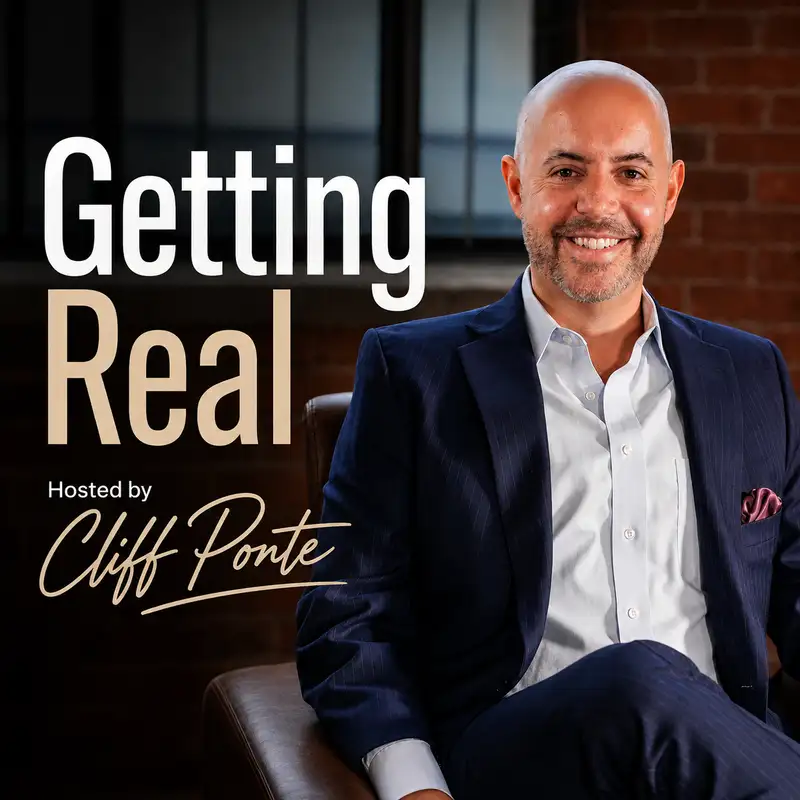
My name is Cliff Ponte. I am a Fall River politician, city council president. I am an entrepreneur, own a number of businesses in the city, and I wanted to start this podcast because I wanted to shine a light on Fall River, have discussions about where Fall River is at, the people that make it, the people who are part of it, the people who might be popular and heck, maybe the people who aren't as popular. That is what I am trying to have this podcast encompass. Real stories, real accountability, some fun along the way, and hopefully for you to see a little different side of me is not this big stuck up cocky arrogant individual.
Speaker 1:Maybe a person who is real, who does the same things you do, but also is perceived as being a little rough around the edges or cocky and arrogant when I don't intend to be. I'm just focused on what I need to do. Search for getting real wherever you subscribe to your podcasts. Maybe a little over a year or two ago, I was going about my day and there was this man who kept showing up on my social media. And from the social media perspective, I'm not really that engaged in it because I'm very busy.
Speaker 1:So social media for me is maybe an hour, hour and a half of my day. At night, in the morning, when I'm grabbing a coffee. And so I kept seeing this successful individual who was interviewing all of these players in the community. And somebody that was getting my attention because of his approach. A genuine, caring, wonderful professional approach.
Speaker 1:Not gotchas. Wanted to get to know you as a person. And I was intrigued and I was talking to my friends and more so one of my closer friends, Sean Kadim, who was on the city council says, gotta listen to this guy. He goes, but what is it like? I said, no, no, no.
Speaker 1:You just gotta listen to the guy. You gotta meet him. And then you gotta go in for an interview, which I think he did. And I was inspired by his story, his approach, his professionalism, his personality. And I was able to get to know him and he is the next guest on this podcast and it's Bobby Couto.
Speaker 1:Bobby, welcome, man.
Speaker 2:Wow, Cliff. Thank you so much for having me here. You know, I started this like thirteen years ago, if you told me that I'd be here today, I mean, just, you know, again, all roads lead here, brother. You know what mean? I love that idea.
Speaker 2:I'm so blessed and grateful for everyone who's been involved. I started this project with just one intention in mind and that really was self help. It evolved into what it is today, but ultimately Cliff and we can get into that, it started as realizing that I needed to I needed an outlet. Know, I had a lot of thoughts, lot of ideas. I probably started life a little early, know, that's one of the messages I like to get out to the young people.
Speaker 2:Maybe don't start life so early, you know what I mean? Try to stop and smell the roses before you assume this major responsibility in your life that will change everything you do. But with that said, I never looked back on it as a mistake. I realized that this was my journey and that everything I've learned in this journey, I could provide some insight to younger people and to people around me to realize that the journey is individual. We tend to get caught up in responsibility.
Speaker 2:We find ourselves assuming responsibilities in our life and never stopping for a second to think of what is the input. Can I handle this responsibility? Is it too much for me to carry? Nobody ever asked themselves that question. We put ourselves in those situations.
Speaker 2:But when it's too late, we're burnt out. We're confused. How did I get here? I'm trying to set, I'm trying to actually give people the roadmap to say, hey listen, work hard young and you won't have to work hard old. And so that's where I'm at today.
Speaker 2:And that's the show evolved into what it is. You know I will say this, the political end of this was never my intention.
Speaker 1:I know you got yourself involved in it though.
Speaker 2:Right, actually was my program director, David Souza, shout out Dave, he actually came to me and it was in the middle of the mayor runs, right? And obviously city council as well. And he says, Bobby, I would really love to talk to some of these people and tap into this new element of the show. And I was reluctant. I'm like, man, I really don't wanna do this.
Speaker 2:And so he says to me, I'll tell you what, what if we don't do a politician? What if we do Jordan Now I have no idea who Jordan Sylvia is, right? So of course like you, man
Speaker 1:Who's Jordan Sylvia? Have no idea. I'm kidding. Alright.
Speaker 2:Okay. Anyway, so I go on social media and as you know, I mean Jordan's very quiet now and I appreciate him. But at the time he was very vocal, probably the loudest voice in the city. And no matter whether you loved him or hated him, he was impactful, right? And so I went on social media and I'm like, David, I'm like, have you listened to my show?
Speaker 2:Like this isn't really my realm of expertise. And he's like, I think we should try this. So reach out to Jordan. Jordan, absolutely no problem, I'll come in and sits down and that interview was the catapult, sitting with him and then Jessica Michaudo followed him after like very shortly after that. And I was very uneasy about the situation because I don't like conflict.
Speaker 2:Right? I find that conflict is necessary obviously because that's where you find solutions. But I don't like conflict. I'd rather have a conversation. You know, if we don't agree, let's find a common ground together.
Speaker 2:Let's have a conversation. Whereas some of these personalities, there is no common ground. You know, they're very straight in their positions and you know, there's no deviation. And so I had to evolve in my shell. Like it went from a monolithic conversation, we're trying to help people to, hey, you know what?
Speaker 2:Let's bring some personalities and let's see what's going on out there and maybe we can make a difference in the city. Next thing you know, I'm sitting down with you, I'm sitting down with Sean Kadim, I'm sitting down with Will Flanigan, I'm sitting down with Paul Coogan. I got a lot of heat for Paul Coogan.
Speaker 1:A lot of heat for what interviewing him?
Speaker 2:Yeah, his interview. Because I think like most people, know, you're from Fall River, people are very reactive and emotional. And I think people were looking for what you just mentioned, the gotcha. Look, at the end of the day, nobody has secrets, especially if you're in politics. Everybody knows your dirty laundry.
Speaker 2:Why am I gonna have you come on my show and just re air your dirty laundry?
Speaker 1:Right.
Speaker 2:What am I gonna do? Am I gonna get five clicks for that? Am I gonna have 30,000 people on the on the floor of a page saying way to go Bobby, make him look like an asshole? No, that's not my intent. My intent is this is someone who's provided service to our city for over thirty years.
Speaker 2:No matter whether good or bad, however you feel indifferent, wherever it matters, that's somebody that's committed themselves to the city for thirty years. There's a level of respect for that. And not everybody makes the best decisions. Not you know, every one decisions makes 10 people angry.
Speaker 1:And you can and you can disagree with somebody politically, right? Yes. And not necessarily hate and despise of them as individuals. And that's where this world has gone wrong. Everybody always asks these questions like, why the hell aren't you running for this higher office?
Speaker 1:Or you know what, you're young aspiring and not necessarily me but just talking to a blank canvas essentially saying, why don't you run for politics? Why don't you run for city council? Why don't you run for school committee? Heck, you run successful whatever. Why don't you run for mayor?
Speaker 1:And the reason for that, and the reason you don't get good people coming from somebody who's been involved in this for over ten years now, is that you have a hard time, people have a hard time overcoming the concern about being the most liked guy in the room. I told you that story before and that story has lived with me for the rest of my life.
Speaker 2:Did you share that with the audience? Yeah.
Speaker 1:Mean, look, I've said for many years that when I first got on the city council, I was young. I was 24 years old. I was about 24, 25 years old. I came out of nowhere, came in second place on a city council race. I was on top of the world.
Speaker 1:My head was spinning. 33 people ran for city council that year. That was the year Jayzel got in as mayor and there was this youth enthusiasm that the city of Fall River wanted. Five new city councilors came in that year. Myself, Sean Kadim, Rich Cabaceras.
Speaker 1:I forget who else it was off the top of my head. And I I it just it's it's escaping me at the moment. But that that that's what that's what came to me. And there was just this youth movement of new blood. And I was on top of the world.
Speaker 1:Right? And what I was worried about at that time was everybody caring about what everybody had to say about me. I'd leave a meeting. I'd go on Facebook, which I don't do anymore and see all the comments. What did they say about you?
Speaker 1:What did they think? How did they say? Why are you talking about me? I was petrified of not being liked. But I had a meeting and I'll never forget this.
Speaker 1:It was about getting rid of the $10 purple trash bags and eliminating the $10 storm water fee or the the $10 trash fee. And I had the whole the whole chamber was packed with people giving me standing ovations, clapping. They were giving me fist bumps on the way out. Yeah. That's why I voted for you and I felt on top of the world.
Speaker 1:I walked down. I had my little briefcase. Sean Kadim was city council president at the time. I'm like, hey, buddy. What did you think about that?
Speaker 1:He goes, can I be completely honest with you? That was the worst display of a politician I've ever seen in my life. I'm like, what are you talking about? You're my friend. He goes, do you want me to tell you everything you wanna hear for the rest of your life?
Speaker 1:Or do want me to give you the God's honest truth? He goes, what you said might have been politically popular, but it wasn't deep down the right vote to make or the right position to take for their betterment of the city. You know what you need to do? Straight up said it right to my face. No smirk, no lie.
Speaker 1:Right to my face and says not in my face, but to my face. Said, you wanna get to a point, if you wanna be in this for any longer than what you're in right now, you gotta worry about being respected and not liked. And I said, wow. Here I am on top of the world after a vote like that. One of my good friends that I've known for a very long time says to me, you wanna feel respected and not liked.
Speaker 1:You need to get respected by people. So when they walk by you, they're not gonna like you, but they're gonna respect you as a person. So I took that I was like, alright. Let me test this out on in in a city council meeting. I believed them.
Speaker 1:I was like, the wind was totally wiped out of me. And so since something else comes out and it wasn't politically popular, But it was the right thing to vote on. I don't even remember what it was. He says, how do you feel? I says, I don't feel good.
Speaker 1:Because I want the social media clicks and people to say you're the best. Ponte, this is why I voted for you. Blah blah blah blah. Yep. And I was like, but I and I lost that.
Speaker 1:So I was like, shit. I didn't have those likes or those people. Ponte's a crony. He's like everybody else. He's making money over this politics bullshit, which drives me crazy.
Speaker 1:So that going back to that, Bobby, is that I had this thing that I was worried about being loved. And then there was a vote I took and he says, how do you feel? I'm like, I don't know. I went back to Facebook, of course, and looked at all the comments after the meeting and they're criticizing me. And then I was like, you know what?
Speaker 1:I don't really care. I'm just gonna be me. But I found that out really early within like four months of being a city councilor. Every election thereafter, I was remember sitting on on a on Ellsbury Street with Kevin Aguirre after my first term, holding a sign for reelection. I'm like, hey, who do you think is gonna top the ticket?
Speaker 1:He goes, you are. I'm like, no. Way. I'm not topping the ticket. There's no way I'm gonna come in first place.
Speaker 1:He goes, Cliff, you're gonna come in first place. I was sitting in seat 8. It was a bright new council. That next time I came in first place.
Speaker 2:Oh, wow.
Speaker 1:I was like, wow. Wow. And then I ran again and I came in first place.
Speaker 2:So this is proved Wow. This is proved your actions. Right?
Speaker 1:Yes. So to circle back to where this all is is, why are you not gonna get good people to run for political office that could impact your community? And it's like, the same olds are running. Well, because though there's this there's this ideology or this approach that it's like, I don't wanna get my family or myself involved in this. Why would anybody do it?
Speaker 1:You know how many people say that to me? Why would any why would you do why are you doing this?
Speaker 2:Putting yourself out there.
Speaker 1:Right? So that's a big story to take away. And I'm sure you've from your standpoint, you've
Speaker 2:seen that. Oh, 100%. You know, and not knowing anyone. I was in true form, I was a virgin to all this. Like I not to say that I wasn't connected with the city.
Speaker 2:I've lived here my whole life and I've been involved in my own things but politics was never really something that I was interested in. And so starting, you know, we're going in with Jordan Sylvia and then Jessica Machado and then now we start bringing in some of the politicians of the city. And then it was very I learned very quickly that everyone is different, right? So sitting across from someone and having a candid conversation, know, I appreciate that my audience loves it, but in true honest, I'm loving it. I'm sitting down because I wanna do this.
Speaker 2:I'm sitting down because I wanna know who Cliff Ponte is. I wanna know what make bro, you're so successful, you know, and you came from the same dark alleys that I did. And so if your success can be what it is, you're the perfect example to everyone in this city. You can do anything. You can be anyone, right?
Speaker 2:But you just have to commit to that. But I understood that when you talk with politicians, it's a different conversation, right? Because to talk to someone who is promoting their own brand, someone that maybe an artist or someone that is a musician, I've even had mob bosses on my show. You know what I mean? They all have personalities, but I find that in the political world, some people tend to put on a personality.
Speaker 2:It's really not who they are, right? And so if I sat here and told you that, I pretty much understand where everybody sits as far as the politicians and you hear certain words and you hear certain things and it clicks with you and you realize I know why he's running or I know why she's running. It kind of comes to fruition, right? But to kind of full circle in all this, back to your point, if I didn't take the initiative, To say, I'm not happy, right? I'm not happy with the way the citizens of the city view our political system, right?
Speaker 2:What can I do to change that? Right? So I already see the conversation because if I sit with you Cliff and we have a candid conversation, I'm like, Cliff's a stand up guy. I really appreciate his morals and his direction. He's successful.
Speaker 2:Right? If you're successful in your personal life, you're gonna be just successful in your political life. I believe that that is driven inside you. If I took that and encompass that and say, I can make this better. What questions do I ask people?
Speaker 2:Where do I go with this? And I almost found myself defending myself. So I would post the clips, hey, I did this interview, did this interview. And then people are like DMing me and saying things like, you should just shut the f up. And I'm saying to myself, why would somebody say that?
Speaker 2:Like why somebody want me to shut the f up? And not to talk old school information, but you know the whole WSAR situation.
Speaker 1:Yeah. Let's talk about that.
Speaker 2:Yeah. What happened? Kind of where I'm leading to with this is I am not a political threat to anybody. Like, I am not. If you come on my show and you give a bad interview, that's on you.
Speaker 2:That's not on me. Because what I'm trying to do is I'm trying to spotlight you. Like I wanna talk about all the great things that you're doing here. Yeah, you're because very we all have skeletons in our closet and nobody's perfect, right?
Speaker 1:Of course not.
Speaker 2:But I wanna talk about the great things and how driven are you, how motivated are you? Nobody's perfect. There's no such thing as a perfect man or a perfect woman. And in doing so, that all came full circle. We did the interviews and then the WSAR thing came up and
Speaker 1:Yeah, let's bring that into perspective though. So for people who aren't aware, we had a I was looking to purchase the radio station with Mike from Forward Report. And the reason for that is no alliances, no partnership with him at all. And he's gonna be a guest at a future episode as well. Is that we
Speaker 2:That's amazing by the way.
Speaker 1:Yeah. He's he's great. And he's doing real journalism. He's doing investigative work, which we'll get into. But I was like, AM radio and radio generally speaking is dying.
Speaker 1:Mhmm. Social media is impacting this at a very very high level. And XM radio and everything along those lines, right, Is impacting radio generally speaking. I'm a radio guy. Yep.
Speaker 1:I spent fifteen years on the radio.
Speaker 2:You're amazing on the radio, by the way. Not not because you're sitting here, man, but you want it.
Speaker 1:I loved it. And then it was a dream of mine to buy it. And it fell apart. We can talk about that one day too or whenever. Yep.
Speaker 1:And I was like, you know what? In order to keep radio alive, I said we gotta bring in a social media component. A guy who has 50,000, 100,000 views and likes on his page, which is hard to get today. And then take the radio and make it a platform that is newsworthy, entertaining and brings it all together. And unfortunately, that deal fell apart.
Speaker 1:Nothing bad to say about the ownership group over there. They were very professional. We have a great personal and professional relationship even though the deal didn't pass or go through. But what the hell happened? I'm asking you this.
Speaker 1:We sat here and with Mike and I'm like, we wanna bring entertainment to the radio. What you're building on The Bobby Couto Show, I thought was great. You're having a following. The following's growing. I'm seeing it grow.
Speaker 1:I'm seeing people talk about you. I'm going around in circles. And like, I was on The Bobby Couto Show. So was I. And I was like, well, shit.
Speaker 1:Like this guy's interviewing everybody. Right? And I was like, this guy would be great on the air. He would be great having his own show from four to six or whatever it is on the radio, taking calls, building your business, building your brand. And I specifically said to you, this is going to be great if you're able to do it.
Speaker 1:You said, man, I'm inspired. We walked the back of the building over here.
Speaker 2:It's an amazing building,
Speaker 1:by We the walked the trail and you were so excited. It was freezing outside, I'm pretty sure. But we were you were excited and it was so nice to see that fire in your eye. And then what happened?
Speaker 2:So Mike reaches out to me. You know, there was some there was some like space in there, We had some space and there was some delays and we weren't sure what was gonna happen. But in the interim, obviously my show continued, right? I was still doing the political interviews, I was still doing all that. And obviously I have an opinion, right?
Speaker 2:Who doesn't have an opinion? I can have an opinion and I call a spade a spade, know, if I see something I'll call it. And so I did have some opinions, know, during the Cougan or the mayoral race, there was definitely some manipulation there, right? Like some people were allowed to go on the radio, some people were not allowed to go on the radio. And so I came right out and said it, I'm like, yeah, hey WSAR, what's up with that?
Speaker 2:Like why wouldn't you allow everyone to have because I always say, if you give it to one, give it to all or you don't give it to anybody at all, right? Like that's because that was me. If I decided that I was gonna bring in Boomer Amaral. Right? Gabriel Boomer Amaral.
Speaker 2:He come on in, bro. We're gonna talk about now if Paul Coogan reaches out to me, I can't say no to Paul.
Speaker 1:Of
Speaker 2:course. Right? I just I just interviewed right?
Speaker 1:So You should be equal to everybody.
Speaker 2:If you're
Speaker 1:gonna bring one counselor in, you bring all council candidates in. If you're gonna bring one mayoral candidate in, you bring all of them in.
Speaker 2:So I made a video. So I'm it's funny because the video was like six months old. This is what this is the funny in all this. So like six months prior, I make this video and I'm driving and it was really just, hey, everybody, know, this is how I feel and you know, The Bobby Couto Show with the momentum and you know, we're doing the interviews and I'm very disappointed WSAR because you know, it's the radio. Everybody listens to the radio.
Speaker 2:And why wouldn't you do this?
Speaker 1:Now this was your first till we clear, this was your first video where you were critical of of them. Okay.
Speaker 2:The very first time. Like and I'm not a I typically am not critical. Yeah. But it it was I was passionate about
Speaker 1:it. Which by the way, to Mike's defense in mind, nobody saw this that that video at all Yep.
Speaker 2:Until Like six months later.
Speaker 1:Like Six months later when you're about ready to go on the air and fill in with Mike. Yes. Yes. Alright. So keep going.
Speaker 2:Yeah. And so it it really, and guys, just so the audience doesn't get the missing thing. I wasn't swearing, I wasn't out of control, I was just making statements. I'm sure you saw the video. Yes.
Speaker 2:I think so. Again, Mike's like, tomorrow. He's like, hey, Wayne is not gonna be here. He's like, I'm gonna be covering for the Wayne, we go show. He's like, you think you can come in and be a guest and we'll introduce you to the audience.
Speaker 2:I'm like, Mike, I would absolutely love to do that. So I drive down, in the parking lot, I actually brought Jody with me, Jody Joe Production shout out. I brought him with me to kind of record. Guys, true story. The reason I'm behind this microphone right now is when I was five years old, Raul Benavides, you know Raul Benavides, the voice of Portuguese voice for it.
Speaker 2:My grandparents owned the house on the corner of Morgan And South Main Street. And there were a couple of storefronts right there. My grandfather had a flat roof. The procession would pass every year. So Raul comes to my grandma and says, hey, can I set up my equipment on your roof and commentate the parade?
Speaker 2:He did. Bro, when I saw him sitting in that seat with that microphone, was like, oh my god, I wanna do that. And he picked me up, he put me in his lap, he put the headphones on my ear, and I knew that this is what I wanted to do. So that's kind of where this all really started for me. So my passion was there.
Speaker 2:So when I was in that studio, those those like five minutes I was sitting there and I could see Mike across the way, Jodi's behind me and I can hear the intro, it's a Wayne Wrigo Show. And I'm like, okay, here we go. Like, we're five seconds behind.
Speaker 1:Yeah. Didn't sleep the night before. You're all jacked up. Yep. I
Speaker 2:know. And then Mike is about to intro and I see him pull off his headphones and he looks at me and he says, I can't have you on the radio. And I could I could hear the Wayne Regal intro. I can hear it almost coming to an end. And I said, what?
Speaker 2:I took my headphones and I said, what? He goes, they're not gonna let me on the radio. You have to leave. I said, Oh. I looked at Jody, Jody looked at me and he started the intro on the show.
Speaker 2:Hey everybody, it's Mike Sylvia here from Wayne Regal. And I took the headphones off, I put them on the table brother and I walked out. So he received a phone call and as he was doing the intro, the person on the phone, doesn't matter who it was, the person on the phone told him, I do not want him on the radio. And so back to the video, that person who called got a phone call from someone else who had seen the video from six months ago and said, hey, don't put this guy on the radio. He's gonna berade you guys.
Speaker 2:He's gonna and it was the father's thing from the truth.
Speaker 1:Yeah, and you know, I and I get that. And you know, when you don't in a situation like that, when you don't know the whole story behind it or know you as the person, I could see how that could be perceived. Sure. But I got to know you. Mike got to know you.
Speaker 1:Right? We got to know you as a person. We've been in your presence. And if the video was good or bad, that's for somebody else's opinion.
Speaker 2:Sure.
Speaker 1:Everybody has the right to their own opinion. But like, that's not that wasn't that wasn't you. So then, that's my opinion and I have the right to my own opinion. Sure. Then you go on outside of WSAR.
Speaker 2:Yes.
Speaker 1:You do a video. Yes. And what happened? What did you say? So in your Literally outside in front of the radio station
Speaker 2:Yes.
Speaker 1:With your phone open saying, hey, I know you're expecting me be on the air, but I'm not. Yes.
Speaker 2:Go. And that's exactly what I said. I said, I'm not quite sure what happened. I said, you know, I said the current lead and this is what I said in my exact words. I said, apparently the current leadership doesn't believe in free speech and an opinion.
Speaker 2:I said, so my hope is that the new ownership coming in will feel differently about this. And that was it. And a matter of fact, that video, I didn't make that video, Jody did, and I didn't even post it, he did. I did actually reach Matter of fact, it was him and someone else were talking and they're like, you have to post that video. And I said, I'm not gonna post it.
Speaker 1:Do you feel that local media is fair?
Speaker 2:No. Why? I don't. Because it's an agenda. You know, I with the exception of Mike Sylvia, I spend a lot of time with Mike Sylvia, we talk and not work wise, we're just friends.
Speaker 2:You know, we we talk about pretty much everything. We talk we could we could talk religion, we could talk politics. Like there's no there's no area we we can't talk about and I appreciate him. But no. No.
Speaker 2:Why? So what I find is that there's a level of control in the city. There are certain people who you know what? I didn't know who these people were. I had no idea who these people were, but they do control a lot.
Speaker 2:And I think that level of control at this point, I think there's some cracks in the glass. I think the ice is thin. I think they realize that there are decisions that they have to make now in order to maintain this level of power in the city. Obviously, the 79 project look, guys, I say this all the time. People are like, well, why would they?
Speaker 2:People die for $50,000,000. Okay. Let's just put that out there. Like people do things for money. And I'm not saying that anybody's gonna die, but what I'm saying is that money motivates people.
Speaker 2:And when you have large amounts of projects and money in the city that people control, they don't wanna give up that level of control. So they're gonna continue to put people in those positions that will toe that line. Do I believe Paul Coogan is a a great honest man? Yes. Yes.
Speaker 2:Yes. I do. Do I believe that there is a level of control from outside forces that makes him do things he doesn't wanna do? Yes. 100%.
Speaker 1:You know, I hear that a lot. Yes. What does that mean? Like, like, truthfully, like, I'm not being critical of you
Speaker 2:because I love you.
Speaker 1:But I'm just I hear that all the time. Mhmm. I break that down for
Speaker 2:me. Okay.
Speaker 1:Because I can't seem your opinion. I can't seem to be able to figure out what the hell that even means. Because every mayor, every elected official, everybody says that about. Yeah. They're like, oh, shit.
Speaker 1:Well, this guy is being influenced by
Speaker 2:I don't say that's for Sean.
Speaker 1:Okay. Fair. Because I truthfully,
Speaker 2:I I Andrew.
Speaker 1:Maybe we don't really care about what everybody else has to say. Yep. Right? Maybe that's what politicians need to But be more how what does that mean?
Speaker 2:So for example, if we talk about the police chief and I don't and I I have the most respect for her. I think she's amazing. Congratulations on her retirement. I think it's wonderful. But if we just talk about that situation real quick and how that was handled and how that was all put out there, there's a level of control there.
Speaker 2:There there are decisions that he's making that are not in the best interest of the citizens of the city. You know, you can you can be loyal to your friends. You can be loyal to people. And again, I I think Paul hurts himself sometimes. And and you know what?
Speaker 2:Even that last video they posted of him, which really painted him in a bad light. I can, I say to myself, you know, this kind of shitty for somebody to do that because I see where he's going with that, but it sounds terrible on the other end of it? Like you're confirming what everybody thought. Look, if you have someone okay. I am a CEO of a company.
Speaker 2:If I'm a CEO of a company, my friendships cannot determine my decisions.
Speaker 1:And words matter. Words matter.
Speaker 2:Yeah. And so when you are at a level of management, when you are at a level of control and you're making decisions to help your friends and push them along and try to hide certain things, look man, you didn't have to do it. Sometimes not getting involved is just important of just you know what I mean? Then then trying to get in and manipulate things to make it seem right. And so when I think of that, when I think of the idea that there are certain entities in the city that feel that they can do what they want without there's no repercussions.
Speaker 1:Right? So are you saying it's like some politicians are influenced by other people to force them to make decisions that deep down inside they might not feel is the best but they're doing it to appease their friends?
Speaker 2:100%. Yes.
Speaker 1:So you think the police chief appointment of Kelly Furtado Yep. Is an example of that?
Speaker 2:I think, you know, I I won't speak to the appointment because that wouldn't be fair. Like she's been here for a long time. What I will say is the outcome. You know, that the situations that have taken place. You know, when when things are tested is usually when you see the flaws.
Speaker 2:Right? And more so recently again with the whole warrant situation. Again, I don't wanna talk about this because I think the world of her and I don't wanna keep bringing this up, but these are serious situations that took place that makes you raise your eyebrow and say, well, if we caught this, thank God to Mike, because if Mike wasn't doing this investigative reporting, we would never know about these things. What else don't we know about? Right?
Speaker 2:Because that's the first thing I think of. And so when I look back at the history and what's going on in the city and what do we really need again? And I beat this drum all the time, but it's a simple one. It's infrastructure. Why is the city so dilapidated?
Speaker 2:Why are you focusing on flock cameras and not fixing Look people in wheelchairs cannot wheel down the street without falling in a pothole. These are basic and I think
Speaker 1:Priorities.
Speaker 2:Yes, the priorities down here, but yet here we are talking about hiring these people, they're not qualified and the whole school situation. And I just find like now we're paying out $600,000 to people that don't even work here. Like it just, to me, it's just bad decisions that you can't explain. And then you get, corporation, like you get up there and you're like, hey, did you read the warrant? I read some of it.
Speaker 2:Corporation called, did you read the warrant? I read some of it. And I say to myself, you know what man, if I'm the mayor and you're my representation and you go up to a podium in front of all the media and say, I read some of it and the situation is critical as this, brother, I'm questioning things, man. I'm going, what?
Speaker 1:Yeah. So I'll say that that the whole taking on the whole taking the public position on first off going going back to the first time the city council appointed Kelly to the chief's job. I was not in favor of that. And I knew that there was gonna come with some political backfire. But goes back to what we were saying before.
Speaker 1:When you don't worry about anything and just focus on doing the right thing and advocating for what is right, you never have everything to worry about. And honestly, this was in what? October? A couple months before an election?
Speaker 2:Sure.
Speaker 1:Most people would have, oh my god. No. I'm gonna be do the right thing and and and and I'm just oh, not the right thing. Do what they want to do, what the political pressure was telling them to do. Mhmm.
Speaker 1:And then Sean and I and a couple of others were just like, I I don't think so. Because we knew at that time what we knew. And this is not everybody's gonna say, oh, this is total bullshit. Cliff's friendly with Govan. I didn't even have Govan's cell phone number
Speaker 2:Right.
Speaker 1:Until after I took that position.
Speaker 2:Right.
Speaker 1:Okay? And maybe if I get so lucky to get him on this podcast, we can we can talk about that. Yep. But the truth of the matter is, it's it's like I didn't feel right about it. Didn't give me the warm and fuzzies.
Speaker 1:Sure. And I have a right to my own opinion. Look, let me be honest with you. Kelly Furtado was was was involved in the four of a police department for a long long career. I remember her as an s o r o.
Speaker 1:I remember when I was at Durfee, I know that she worked her way through the department. She impacted the city of Fall River and had positive impacts on the fall of a police department. She did some really good initiatives as chief. Sure. That is not personal.
Speaker 1:If I see her, she probably won't give me a hug. Let's just be real. Okay? But I've been in her company. I was in at New Boston bakery when the governor was here.
Speaker 1:We stood on the side. We had a good conversation. It ain't personal. It's politics. If I see her, I'll wish her well.
Speaker 2:Yep.
Speaker 1:I didn't go to her retirement party. Right? But I also
Speaker 2:wished her invited.
Speaker 1:I wasn't either. Maybe I was. I don't know. But I'm just saying, like, that that's not that's where we go wrong. We should be able to break bread and disagree politically.
Speaker 1:Yes. We should be able to break bread and be able to say, you know, I don't like the way you stood on this. And I'll give Paul Coogan credit where it's due. He's very very good at that. I could go at a council meeting and literally eviscerate a position that their administration's taking, and he would see me the next day, hey.
Speaker 1:How are doing? You doing good?
Speaker 2:Right.
Speaker 1:Anything you need He's able to separate that. He's able to separate that. He's strong when it comes to that. Mhmm. K?
Speaker 1:Other people are not that strong. And that's one of the traits that he does have that not a lot of other people can have that can bring to that leadership role as being mayor. He has his flaws. Trust me.
Speaker 2:Right.
Speaker 1:He steps on his words all the time and he doesn't intend to. But one thing that I can give him credit for that I don't necessarily remember any mayor really having besides maybe Will Flanigan, is that you're able to turn that page fast. I am gonna criticize you. And if I'm on a city council, and there's a new mayor in next in two years from now, I am gonna criticize the hell out of them because that's what I was elected to do. I don't care if they like me or not.
Speaker 1:Because that is what I was asked and elected to do. Branches of government are there for a reason. So putting this all into perspective, I think politics from the police chief to appointments to everything, you're in the limelight every single day.
Speaker 2:Absolutely.
Speaker 1:And how you act and how you show up and how you treat people is important.
Speaker 2:Oh, sure. For sure. And the thing is is when there's a lot of nuance, when you don't give answers for certain things, people ask questions. Right? And then you start making excuses for the things that don't make sense.
Speaker 2:And then people are like, what do you mean? Why why would you say that? Like, so for example, and again, I don't wanna beat this horse, but you know, people were like, people were saying, well, it wasn't top secret that her son was like, he wasn't a secret agent. Like remember they were saying, and then there was an actual email that went out that actually said that he was a So there were certain things in there and then of course, Mike's like, hey, you said this and hey, you said this. And now you're like, hey, wait a minute, this makes sense.
Speaker 2:You said one thing, but it was actually something else. And now everything starts to crash. And then of course, Paul and again, no hate to Paul, I like Paul. People might not but like I like Paul Coogan and I appreciated the fact that he
Speaker 1:But you disagree with him politically?
Speaker 2:100%.
Speaker 1:Where the hell have we gone wrong as a society where you can't disagree with an elected official or a politician and then they put you in a corner and say you hate him. No. I just disagree with his policy.
Speaker 2:Absolutely. Mean, I would invite him to lunch. I'd love to sit down with him again and talk. Mean, he probably wouldn't do for whatever reason, but I I was my criticism of Paul, thought was very fair. Like I I never spoke, oh, Paul just he's a jerk.
Speaker 2:Like those words never it was always about substance. It was always about my point of view. You know, I
Speaker 1:Did he ever reject any of your invitations to go on your show?
Speaker 2:No. We actually reached out to him during that whole process and he agreed and came on the show. I mean, I haven't talked to him since, but he did come on the show when I asked him to. I did.
Speaker 1:Okay. Good.
Speaker 2:Yeah, he did.
Speaker 1:And so from a perspective of looking at that last mayor's race, and we'll wrap up soon, this is that the last mayor's race, you obviously didn't necessarily support him or did you? Did you take
Speaker 2:It's a funny because I supported Paul Kugen. Right? And then the candidates came up. So here's some perspective for you. Something that I always struggle with was, okay, I'm gonna go down and vote.
Speaker 2:Who am I voting for? Right? Like everybody knows the incumbent. Everybody knows the incumbent. But who are these other people?
Speaker 2:I had no idea who Gabriel Boomerang was. Never met the guy in my life. Never met him. So he was like my first interview. He came in, sat down, charismatic, very vocal, very, hey, listen.
Speaker 2:No bullshit. This is how it's gonna be. And I found that very attractive. I'm like, well, maybe this is what we need right now. Because, you know, I will say this.
Speaker 2:There was a time and place for a boomer. Yeah. Boomer isn't for all the time. Right? Because boom is very aggressive.
Speaker 2:But I thought that this was a good time because we need aggressive behavior right now. We need people that are gonna step up and make some really hard decisions because the city desperately needs it. You know, our homeless population. Right? Our drug situation, our our veteran situation.
Speaker 2:You know, speaking to Talos and, you know, realizing the fundamental priorities that I think should never go forgotten, like not even considered. Right? And then people like, you know, again, boy, they're gonna beat me. Like Linda Pereira. Right?
Speaker 2:And that whole situation with Talos and the fact that they were holding his salary and you know what? And I'm not gonna speak to that because I don't know all the details, but I will say this. I shouldn't even know about that. That shouldn't be public information. If there's an issue with Talos' salary and you guys are gonna give him a job and you're go through all that, that should happen behind closed doors somewhere quiet because my concern about Talos is his output.
Speaker 2:If you are the, you know, the the the the advocate for the veterans, the home like, all that, then that's what I wanna see from you. I don't wanna have Talos on TV talking about how the city council or people in the city council are withholding his salary because you know, he said we're on the group of people that don't agree with what he wants to do. Mhmm. And so that's those are the fundamental you know moments in my life that I'm wow, that doesn't seem right. And so when we talk about influence on the backside, that's what I'm talking about.
Speaker 2:I'm talking about people making decisions to help their friends, you know, get their their friends jobs. Know, I think Linda Perra has probably like 30 family members working for the city. I I'm not gonna quote that, but there's a lot of people here. Right? And that keeps happening.
Speaker 2:Why does that happen? Why does that happen? And what's the give and take for that? Right? I'll get you a job.
Speaker 2:Hey, I'll get you a job. But it shouldn't be that way. The nepotism shouldn't exist. It should be opportunity for everybody. I'll tell you this right now.
Speaker 2:I'm a manager. I'm a manager. I'm a lifelong manager. The reason I don't manage people anymore is because I decided I needed to pull out of that. I worked at Comcast for fifteen years.
Speaker 2:I managed 30 men and women almost every single day. And when you manage people like that, you're not just managing people, you're managing their families. You know? And it takes a lot of audio. I raised my family doing that and it took a lot out of me.
Speaker 2:And at some point, I'm like, you know what? I can offer other things in other ways to other people. It doesn't have to be this way. So I shifted. When I realized that I can no longer provide that type of service for people, I wanted to do something different.
Speaker 2:And that's what I did. I shifted into the facilities world, right? And so I work for a large medical company and I do all the maintenance and facilities. And I do project management. I take care of all of the 50 brick and mortars and 18 mobile trucks.
Speaker 2:I manage all of that, right? I look at the city and I drive in the city because this is what I do. And I say to myself, how is the city like this? Where is the maintenance? Where is the facilities?
Speaker 2:Where is the ideas to make this place better? The idea that people cannot you know, I'll say this. Infrastructure to me is principle. It's the foundation to the building. If you don't have that infrastructure, nothing else works.
Speaker 2:If the bus is out running, people can't get to where they're going. If an ambulance is going down the street and they're too busy doing construction for three weeks where it should've took them two days, like, Bedford Street, are you kidding me? Mhmm. It's been six months. That shouldn't happen.
Speaker 2:That's the those are the things, like, think DCM and that look. You guys need to do a better job.
Speaker 1:So you think looking at it from your standpoint that you wanna see less about less as a as a resident and per a person who is connected to the city. Yep. You wanna hear less politics. You wanna see let's get more work
Speaker 2:done. Absolutely. Yeah. Absolutely, Cliff. And that's what's, you know, I'll say this, that's what's really attractive about you is that you're an act you and Sean, you guys are action driven.
Speaker 2:Right? It's you know, I I think, you know, we we get into these situations and when you get into legalities, right? Like I think the court system, everything's a continuance. Nothing ever gets, nothing gets finished. It always gets pushed out.
Speaker 2:And so that's very frustrating to me. You know, I show up at the city council meetings and I really wanna be connected to what's going on. And so, you know, I hear the conversations, you know, I appreciate Sean because he questions everything. And it's it's important to do that. You know, it may sound right, then Sean will be like, oh, that sounded right.
Speaker 2:And then Sean will be like, yeah, but I'm like, wow, gee, I didn't even think of that. And that's the mastery in what he what he does.
Speaker 1:Yeah. But you know, and I'm not saying this because he's my friend, like who has more knowledge on municipal government on the city council than Sean? Absolutely. I mean, the dude is a city administrator for over ten years, which is a it's a badge of honor to be a a city administrator in a town for over ten years. Like, that is prestige prestigious.
Speaker 1:Absolutely. Right? Absolutely. And like the dude has more knowledge on municipal government than anybody. And if the city council ever lost a guy like that, we would not be as strong as a body Agreed.
Speaker 1:Because of his points of order or his points of information to help a council to get through things. A lot of that stuff is be could be behind the scenes, but he brings an institutional knowledge Sure. And an accountability that is unmatched. Right. And again, I'm not saying that you people are gonna criticize, oh, he's just defending his friend and but that's a reality.
Speaker 2:But Cliff, you know, I I'll challenge that and say the sense that, you know, look at Mike Kenuel. You know, Mike's a new guy. And you if you watch the city council meetings, you see what Sean is doing. Sean is doing for him what he did for you. He's really setting him up for success.
Speaker 2:Because I know Mike wants look, if you if a car is in a pothole on Wilson Road, somehow Mike is there. Right?
Speaker 1:He's like, I don't know how to
Speaker 2:do it.
Speaker 1:He must have like, I don't know.
Speaker 2:Right. The guy is everywhere. He's everywhere. Yeah. But but but the same token, you know, he's young in this.
Speaker 2:Right? And so I see what Sean does for him on the city council. People are like, well, he's really hard on him. That's necessary.
Speaker 1:Yeah. You know, it's interesting because Mike Canuel, great guy, and we've had a lot of conversations. He's learning. Like, and he's and he and I told him after a recent meeting, right after budget briefings, I says that was the best meeting you've ever had. And he looked at me like, are you talking about?
Speaker 1:I thought I had other good meetings. Like, no. No. No. You're growing.
Speaker 2:Yes.
Speaker 1:You're maturing. Because listen, you get elected in November. It's not like you're gonna go through a three week seminar and you know, this is how you become a city councilor. January, you get sworn in. You already got people pissed off at you because everybody's jockeying for president and vice president.
Speaker 1:Mike, you vote for me. And then, oh, no. Don't vote for Cliff. Vote for this guy. And then and then you're all you step into a meeting already of people pissed off at you.
Speaker 1:Sure. Right? And then you get your first meeting. It's a budget briefing. It's a quarterly update on a budget that you had no say in.
Speaker 1:And then it's like, okay. Alright. And then you wanna take a position. And then you wanna file your first resolution. And then you wanna come out of the gate strong.
Speaker 1:Right? And if you don't have support amongst your colleagues, you ain't getting shit done. Mike is learning. Right? Mike is maturing and he's doing a fine job of that and he's holding people accountable in a very good way.
Speaker 1:But that's not something that you're gonna learn. You first meaning you got marbles in your throat. Sure. You're afraid to say shit because you're afraid to upset people. But like, he's he's it's not like he's he's slowly got there.
Speaker 1:He he came out of the gate hot. Right? But he's doing it in a genuine way. Sure. Yes.
Speaker 1:And I think the majority of the city council or I could speak for the body in in itself is that they're trying really really hard to impact the people that got them there. And they're trying to help. Right? And so going back to what you said about Linda. I mean, granted it could know, she might have people that I don't really know whether it is or isn't.
Speaker 1:It doesn't matter to me. It's just like she tries to help her people. And every council that goes in there and tries to help people. And how they help people is within their own sphere and how they conduct their business. They're gonna be tasked with asking people to reelect them a year from now.
Speaker 1:We're gonna be out there campaigning again saying, I want you to vote for me. And then of course, are gonna say, the same old people get elected all the time. Well, if you don't want the same people to get reelected, put other people into the race that have a different perspective that are gonna go out there and grind.
Speaker 2:But Cliff, how do get people to show up? That's the problem.
Speaker 1:10,000 people go out and vote. 10,000 people.
Speaker 2:We have a 100,000 people to
Speaker 1:see, bro. I get it. But the problem is the political landscape isn't controversial enough right now to get 15 to 18,000 people
Speaker 2:to vote you ran for that was 30 people running. 33
Speaker 1:people
Speaker 2:33 people running. 16,000 What happened to that? What where is that? Was it Jazel? Was it was it Justin Jazel?
Speaker 1:Nothing to do with Jazel. Jazel might have thought it was, but had nothing to do with him. It was the fact that we had a $10 trash fee and purple bags. Alright? That's what got 33 people a run for city council and all these people.
Speaker 1:And I ran on saying I'm gonna eliminate the purple bags and a $10 fee that year. Okay? Because that was what was grabbing people's attention. There hasn't been anything controversial enough for it. We used to go to city council meetings.
Speaker 1:Both sides of the chamber were packed with people. We had standing room only. People were coming in with pom poms, clapping, signs. That stuff ain't happening right now. Wow.
Speaker 1:It will. Again, when? I don't know. I don't know. Right?
Speaker 1:So, like, citizens input, two or three people show up. Back then, 15 people. We would have citizens input from six to 08:30 before we started a committee on finance.
Speaker 2:From what I've seen, wouldn't believe it if you weren't telling me, man.
Speaker 1:But right now, like, that's what it was. There really hasn't been don't know if this is credit to the Coogan administration or not, but there really hasn't been this political storm. And Jacel had a nice run when he was mayor. They had he had nothing really going on until he got arrested. And then people started showing up.
Speaker 1:And then there were people all over the place. And then there was like, oh my god. And then we gotta recall them. And then I'm having press conferences. And the city council's taking them to court.
Speaker 1:And all these other like, that is what got people out. And so at that time, Cougan ran unopposed essentially and that's where we're
Speaker 2:at. So let me ask you this question. I should be asking questions, but I'm
Speaker 1:gonna Yeah. Go ahead.
Speaker 2:Do you think that this is what we're living in right now? The residual? Because nothing is instant, right?
Speaker 1:Unless something happens, that is going to get people pissed off, it's going to be the same base of people who go out and vote. You might get 500, a 2,000 more people that come out and vote that never voted before. When the federal government does a better job of thinking there's not election tampering and fraud and all that other shit, when voter ID comes and let unless they made it made it a little easier to get people to vote same day voting, same day registration, those kind of things, I think we're gonna probably see much of the same. Because unless there's a reason for people to leave their job and go vote because of something that's impacting them, that's when I think it will change. And I honestly believe the foreseeable future as we wrap up, the foreseeable future about politics and people going out to vote is going to be based on what those politicians are gonna do from them.
Speaker 1:Not necessarily from a personal standpoint. Not necessarily saying if if you elect Cliff, he's gonna get my cousin a job. That's not what I mean. I'm talking about the overall consensus of people going out there, voting for people that are gonna impact them. Trump got elected in one Fall River, not because he's Donald Trump.
Speaker 1:It is because he he he spoke from a basis of he wants to drop gas prices. Whether he does it or not, it doesn't matter. That's what he said. He wanted to reduce grocery prices.
Speaker 2:No new wars.
Speaker 1:No new wars. You can say all these things. I mean, listen. People ran for office saying they were gonna eliminate bags and $25 stormwater fees. And they they say these things to get in and then sometimes it doesn't work.
Speaker 1:The problem with politics from a national level that trickles down locally is that the people who speak about how they're gonna impact people's pockets are the ones who are gonna get elected and elected and elected over and over again. Not people who give this political nonsense that, you know, we're gonna make sure that we, I don't know, preserve this and people wanna see how their pockets are impacted. And this council should be credit given credit. We didn't increase water rates for the last two years. We're Chris Peckham and other councils are trying to advocate right now to not go to the the debt exclude the the total two and a half.
Speaker 1:Maybe we go to one, one and a half, and we can cut the budget. These are some of the things we're trying to do, but we can only do so much. So, look, let's just wrap this up and just say that I think very highly of you. I think we could sit here for three hours and And I think that there's a side of you that people don't really know. And I want you to utilize the next two minutes or so to just wrap this up and say, if there's anything about Bobby Couto that you might be a getting criticized for, or people don't know the genuine nature of you as a human being, the pure respect and just this the kind of person you are, I know, I see.
Speaker 1:Well, what is it out there about Bobby Couto that people might not know that they should know? And keep that in mind when you're out there maybe holding people accountable. Because all of a sudden, accountability in this city is a dirty word and I don't understand why. Absolutely. So what is it?
Speaker 2:Well, two things. One, just to piggyback on what you just said, I think the battle will continue because we are battling what I call the bottom feeders. Right? If you have enough people that work in under a government umbrella, those people, their jobs are contingent upon the person that's in the seat. So if you have 3,000 people that work for the city of Fall River, chances are those people are gonna wanna keep their jobs.
Speaker 2:And so they're gonna keep that person in power. So to me, I say that's the neutral number. So we need a minimum of 3,000 people who don't work for the city to show up with the right sided vote. Right? Because immediately those again, and so I think once you conceptualize that and that's what I realized is like, how do we only get like 7,000 people showing up?
Speaker 2:You know I mean? And then you realize that half those votes were already predetermined. You know what I mean? And some will argue that point, but I'm gonna tell you right now, I spoke to a couple of people that their city contracts were contingent upon Paul Coogan being the mayor. Right?
Speaker 2:Because he's the one that signed that contract. And my conversation with them, they weren't, you know, they weren't saying that, you know, they were like Paul was their guy, but they were gonna vote for Paul because that's their job. That's their contract. They're not gonna wanna deal with Cliff Ponte coming in and having to renegotiate their contract. And so that's an element that I don't think people are aware of, you know what I mean?
Speaker 2:And I just and I'll park that right there and I just the reason why I'm trying the reason I say that is because I want people to be motivated to go and vote. Like it matters, you need to show up. And people talk about caring about the city. We got influences that, you know, they they do these skits and they they do nothing but talk shit about the city in their own way and they think that they're clever when they do it. But at the end of the day, you're just spawning this anxiety for the people in the city.
Speaker 2:Right? Like I can't come on my show and have an opinion without you thinking that I have some intentions behind it. But the truth is I don't do this for the money, Cliff. You know, I I have a full time job. The reason I do this every day, the reason I come into the studio and I get this all I gotten, it's because I truly genuinely care about the human experience.
Speaker 2:It's bigger than the city. The city is just a small part of this. You know, I'm 51 years old. I know I don't look it but I'm 51 years old.
Speaker 1:You don't have as much gray hair in your beard as I do and I'm not. And
Speaker 2:one thing I realized now at this point in my life is that I was very unfair to myself. And when I say that is I did not appreciate my human experience. And like we said in the beginning of the show is we tend to assume responsibility even when it's not ours. And before you know it, you're surrounded by it. Whether it be family members, aging parents, whatever that may be, that's all gonna come.
Speaker 2:If you're blessed to have parents at your old, eventually that's gonna be another responsibility for you. So my point in saying this is that it is so important, if there's one message I get out today and being here with you and like I actually thought about this and I was a little nervous about coming here bro. Nervous. Yeah well because you know what, I don't normally, I'm not the interviewee, I'm usually the interviewer.
Speaker 1:Yeah I know, it's nice to change course It's
Speaker 2:right and so I'm driving and I'm like, you know what, what can I bring to the, and it was so, it came to me, it was so profound and it was the human experience, the individuality? And Cliff, I can see it in you and that's why, and that's kind of what in spite is, you've made a choice, You're successful, you've decided that, you know, something that sat with me is when you said, hey man, my parents were getting older and you know, they wanted I wanted to give and I bought Almax Diner and I I said, hey, go go to work. Brother, that's profound, man. People don't do that. You know, people just don't care enough.
Speaker 2:But what you're doing is you're investing in yourself. Right? You haven't Listen, this is me looking outside in. You haven't convoluted your life with relationships, right? You're not out at nightclubs, you're not like, brother, like I see you, I see you and I say to myself, that's the secret right there.
Speaker 2:You live your best life, brother. Everything will come along. What I find is the more I live my life for me, the byproduct, the people. Like what am I doing here, Cliff? Five years ago, had a gun in my mouth.
Speaker 2:I was gonna blow my brains out. That's true. That's the truth. Like I was done. There was nothing left for me.
Speaker 2:And now here I am living my best life, brother. I could have been doing this twenty years ago, but I didn't have that mindset then. It took my experiences through my life. It took the wins. It took probably more losses than wins to make me realize that, you know what?
Speaker 2:I'm not done yet. And if there's one thing that I wanna share with people is people will ask you the question, what's the meaning of life? And my answer to that is enjoying the passage of time. That's it. That's what we're doing here.
Speaker 2:We're literally enjoying the passage of time. If you're not enjoying your passage of time, you're losing because life is finite. In five minutes, we're gone. You know, I had a good friend of mine a week ago, suicide, 52 years old. No one started coming.
Speaker 2:What happened to him? What was it? Did he lose his light? And so if there's one thing I can do getting behind the microphone, bringing all these personalities into my studio, I want people to see that the struggle is the success. You need to hit rock bottom because that's where you realize when I had that gun in my mouth, if I had to pull that trigger guy, none of this would have happened.
Speaker 2:But I made a decision that I needed to move up from here. And so that's what the show is about brother. It's about the progression. It's about realizing that your journey is individual and divine. And that's why I'm here brother.
Speaker 2:That's why I'm here.
Speaker 1:Well, I just I'll just say that it's been an honor to have you here really. Mean that, like you've done some great things for the community, you've impacted people's lives maybe when you don't even realize it. And your approach and the way you care genuinely about people isn't lost on me and isn't lost on the people that you know. So it's been an honor to kinda break into your story a little bit more. You have I think the brightest of futures with those who are trying to get into make a difference in the community from a podcast perspective or just from a local perspective.
Speaker 1:And I think Fall River is is better as a result of the platform that you provide people. Bobby, thanks for coming on. I appreciate you and keep doing what you're doing.
Speaker 2:Appreciate it, brother.
Speaker 1:Alright. So hang out for another tune in for another episode that we have coming in. We're gonna continue to have impactful guests, impactful people, that is what makes the four of a community. Thanks for listening.